
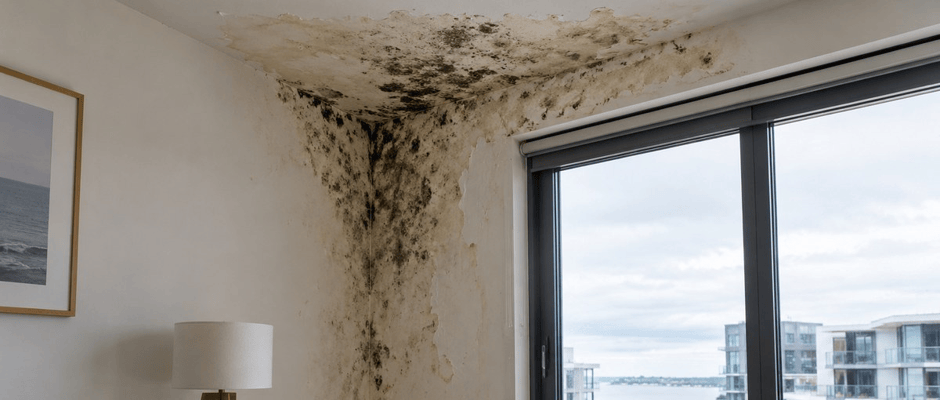
Under section 106(5) of the Strata Schemes Management Act 2015 (NSW), a lot owner can recover reasonably foreseeable losses caused by an owners corporation’s (OC) failure to repair common property. A recent NCAT Appeal Panel decision explains how these claims are assessed, and how the Tribunal treats an OC that is late, but willing, to comply with repair orders.
In The Owners – Strata Plan No 6707 v Gaters [2026] NSWCATAP 331, consent orders required the OC of an Auburn scheme to obtain a mould expert’s report and, if recommended, engage a builder to remove mould in a lot and rectify it within four weeks. The report recommended that a builder first assess the sources of water ingress. The OC engaged a contractor to investigate, but access was not sought until after the deadline.
On the lot owner’s renewal application, the Tribunal found the OC had “no intention” of complying and ordered it to pay $10,635. The owner’s claims for medical expenses and $39,514 in lost rent were dismissed.
The Appeal Panel allowed the OC’s appeal. Investigating the water ingress was exactly what the expert had recommended and fell within the original order, and the finding that the OC had no intention of complying was against the weight of the evidence. As the Tribunal’s discretion had been exercised on a mistaken view of the facts, the matter was remitted for rehearing.
The owner’s cross-appeal was dismissed. He had continued to live in the unit, so the “potential” to earn rent was not an actual loss. The Panel added that a lost rent claim must be supported by sworn evidence and assessed on net income after expenses. The medical expenses claim failed for want of evidence linking the owner’s condition to a breach by the OC.
Ultimately, the decision illustrates that section 106(5) compensates for actual, proven loss, and that an OC’s efforts to comply are relevant to the Tribunal’s discretion on renewal.

