
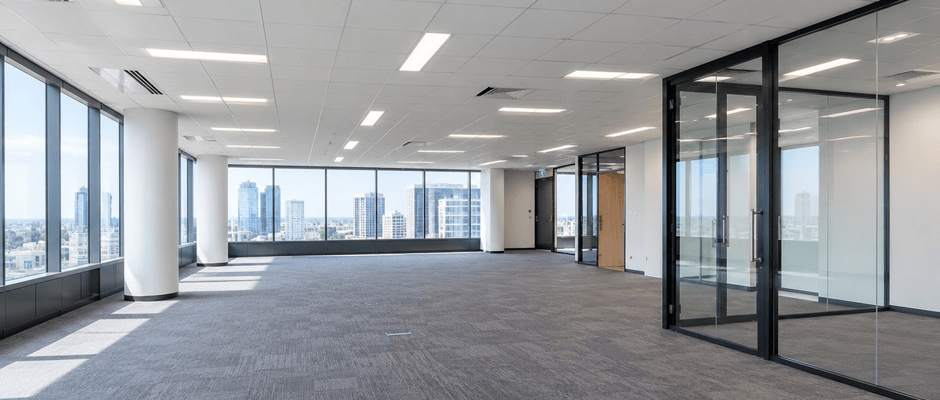
Make Good Clauses: When Does a Tenant Have to Remove Its Fit-Out?

Make good disputes often arise when a long commercial lease ends. A recent NSW Supreme Court decision shows that their resolution depends on reading the lease as a whole, rather than interpreting a single phrase in isolation.

Allied Pinnacle Pty Ltd v G R Mailman & Associates Pty Ltd [2026] NSWSC 87 concerned commercial premises at Huntingwood in Western Sydney. The tenant took a ten-year lease in 2015, with options for two further five-year terms, and installed a substantial fit-out at the start of its tenancy. The current landlord bought the premises in late 2017. The tenant did not exercise its option and vacated in August 2025, leaving the fit-out in place.

The central question was the meaning of clause A2.1, which required the tenant to yield up the premises consistent with their “condition” at the commencement of the lease. The landlord argued this meant restoring the pre-fit-out layout. Muston J preferred the tenant’s view that “condition” referred to the standard of the premises, not their configuration. The word was used in that sense in clauses A2.2(c) and A24.5, and the more specific make good provisions in clause A24, which prevailed, contained no reinstatement obligation. Clause B1(22) also gave the tenant a discretionary right to remove its fixtures, which would have been pointless if removal was compulsory.

The tenant did not escape liability entirely. Clause A24.3(b) required repainting of “all painted surfaces”, including the exterior, and the tenant was liable for outstanding redecoration works, including furniture removal, internal repainting and carpet works. The Court rejected arguments based on failure to mitigate, repudiation, waiver, estoppel and an implied duty of good faith, and found that the unconscionable conduct claim would have failed in any event. Damages were referred to by the referee.

Ultimately, the decision illustrates that general yield-up wording will be read in light of the lease’s more specific make good provisions.

Clarifying Director Liability Under the Design and Building Practitioners Act

The scope of directors’ personal liability under the Design and Building Practitioners Act 2020 (NSW) (DBP Act) continues to be refined as courts consider when individuals may be held responsible for defective building work. The recent Supreme Court decision in Strata Plan 92183 v Samdora Pty Ltd [2026] NSWSC 406 provides important guidance on the distinction between directors who actively participate in construction activities and those whose involvement is limited to broader business responsibilities.

The dispute arose from alleged construction defects affecting a residential townhouse project in Mangerton. The owners corporation sought to hold the parties involved in the development accountable, including the builder and developer, and the individuals who directed each entity. A central issue before the Court was whether the directors could be personally liable for failing to discharge the statutory duty of care imposed by section 37 of the DBP Act (NSW). 

In this case, the owners corporation brought proceedings concerning defective works at a townhouse development in Mangerton. The claim was brought against the builder, developer and their respective directors, with allegations that both directors had breached the statutory duty of care imposed under section 37 of the DBP Act. 

The DBP Act adopts a broad approach to identifying who may be responsible for construction work. Section 36 captures not only those carrying out physical building activities, but also individuals who play a significant role in directing or overseeing the works, including through supervision, coordination, project management or control. Accordingly, a director’s exposure will depend on the extent of their actual involvement in the construction process. 

The Court considered the position of each director separately.In assessing the developer’s director, the Court focused on whether his involvement went beyond that of a passive participant. Although he attended certain site inspections and had some involvement with the project, he did not demonstrate meaningful control over, or responsibility for, the construction activities. As a result, the Court was not satisfied that his role was sufficient to bring him within the scope of the statutory duty of care under the DBP Act.

The Court reached a different conclusion in relation to the builder’s director, whose appointed role as supervisor placed him directly within the construction process.The Court accepted that his responsibilities placed him within the scope of the DBP Act and that he thus owed a duty of care to the owners corporation. Notably, each defect was assessed separately, with liability only arising where the evidence showed that the issue could have been identified through appropriate inspections and supervision.

Ultimately, this decision confirms that holding the position of director alone does not automatically create liability under the DBP Act. The critical question is the individual’s practical role in the construction process. Directors with direct statutory responsibilities or active involvement in supervision and control face greater risk, while those performing functions separate from construction activities will require evidence showing a connection to the alleged defects.