No More Guesswork: NSW Underquoting Reforms Set to Commence on 17 November 2026 and How It Affects Property Owners

For property owners, including investors, the way a property is priced and marketed for sale is about to experience a change. Underquoting has been a longstanding concern within the NSW property market and involves the practice of advertising a property below the price an agent expects it to sell for. From 17 November 2026, amendments made by the Property and Stock Agents Amendment (Underquoting and Other Agent Conduct) Act 2026 (NSW) will significantly tighten the rules for residential sales.

The most prominent change is concerned with how agents arrive at an estimated selling price (ESP). Agents must now consider the sale prices of the three most comparable properties sold within 2 kilometres in the previous 6 months in metropolitan areas, or within 5 kilometres in the previous 18 months in regional areas. The amendments require the agent to give the seller a written estimate of the price or price range, together with the supporting evidence. If the estimate later changes, the seller must be given written notice, and agents must keep records demonstrating how each estimate was derived.

The reforms also affect how a property should be marketed, with every residential sale advertisement being required to include a price or price range. This advertised price cannot be lower than the agent’s estimate, the highest registered bid at a passed-in auction, or a written offer rejected solely on the basis that it was too low. Additionally, if the price changes or an ad becomes non-compliant, online advertisements must be updated or removed within one day.

Penalties for agents also increase significantly, with the maximum penalty being the higher of $110,000 or three times the agent’s commission. NSW Fair Trading can also issue fines of up to $55,000 for corporations.

Moving forward, from 8 February 2027 agents must prepare a Statement of Information for each residential sale which is available to prospective buyers and sets out comparable sales and the ESP.

Ultimately, the reforms represent the most substantial change to NSW price guide regulation in recent years, shifting the basis of advertised prices from agent discretion to documented market evidence.


Pets in Rentals: What the October 2026 Changes Mean for Landlords

NSW landlords have seen their control over pets in rental properties narrow considerably over the past two years. The latest change, which commenced on 2 October 2026, allows tenants to bring a pet into a property before the landlord has decided whether to consent.

Since 19 May 2025, the Residential Tenancies Act 2010 (NSW) has required tenants complete the NSW Fair Trading’s pet application form, for consent to keep a pet. A landlord has 21 days to respond to the application before it is considered as approved. The grounds on which a landlord may refuse consent are set out in section 73F of the Act and include factors such as inappropriate fencing, insufficient open space for the animal, or where the animal is highly likely to cause damage exceeding the rental bond. Under section 73E, landlords may also attach reasonable conditions, such as requiring professional carpet cleaning at the end of the tenancy, however the landlord cannot increase the rent, bond, or require other security. A tenant may challenge a refusal or condition through NSW Fair Trading or by applying to NCAT within 28 days.

Under the October 2026 changes, a tenant who moves into a property with a pet may apply for consent within 7 days of the tenancy starting and may keep the pet at the property while the landlord considers the application. Where consent is ultimately refused, limited rules give the tenant a period to make other arrangements for the animal. In practice, this means a pet may be living at the property during the landlord’s 21-day decision period.

The reforms do not override other restrictions that apply to a property, such as strata by-laws, and they do not extend to purpose-built student accommodation.

Ultimately, the October 2026 changes further shift the balance of NSW tenancy law away from landlord discretion, making the 21-day response period and the permitted grounds for refusal increasingly central to how landlords manage pet applications.

Building on a Public Road Without Consent Costs Developer $430,000

Carrying out development without consent can be costly, even when the land is right next door. A recent Land and Environment Court decision shows how seriously the Court treats unauthorised works on public land.

In Woollahra Municipal Council v Neil Street Co Pty Ltd [2025] NSWLEC 117, a construction company built walls, filled the land and installed stormwater pipes on a council-owned strip of land in Rose Bay that runs down to Sydney Harbour. The land sat beside a home owned by the wife of the company’s director and none of the work had development consent.

The company pleaded guilty to three offences under the Environmental Planning and Assessment Act 1979 (NSW). Charges against the director were dropped after he agreed to pay for repairs costing about $491,000, along with the Council’s costs.Pain J found the stormwater works were the most serious offence. The new pipes were narrower than the Council pipe they connected to, a risk her Honour said would have been obvious to any competent builder.

The company received little credit at sentencing as its guilty pleas came late, earning only a 10% discount, and no director gave evidence of remorse. The Court also refused to treat the director’s agreement as cooperation by the company. As a result, the company was fined $430,000, ordered to pay $75,000 in costs, and required to publish notices of its offences in two newspapers.

The case highlights the significant penalties that can follow unapproved works on public land, and the limited credit available at sentencing where guilty pleas come late.

Over the Line: Neighbours Ordered to Remove Encroaching Studio

When a building crosses a boundary, the Land and Environment Court can either order it to be removed or order the land beneath it to be transferred to the encroaching owner in exchange for compensation. A recent decision shows how the Court chooses between the two.

In Johnston v Cutbush [2025] NSWLEC 1482, the respondents owned a rural property at Rosebank. In the 1990s, they enlarged an old shed into a studio that extended up to 5.57 metres onto their neighbour’s land. A composting toilet and grey water tank for the studio were later built entirely on the neighbour’s side. None of the work was approved, and the respondents never checked where the boundary was, relying only on what a real estate agent had told them.

The neighbour bought her property in 2016 and planned to use that area for ecotourism. Her main request was for the structures to be removed. The respondents instead asked for 280 square metres of her land to be transferred to them.

Commissioner Gray ordered removal. Apart from the $65,900 removal cost, there was no evidence of hardship to the respondents. The council approvals they later obtained relied on plans wrongly showing the studio within their own land. The land needed for a transfer was also more than three times the land under the structures.

The respondents were given 60 days to remove the studio, toilet and tank at their own expense.

Ultimately, the decision illustrates that the Court will not readily require a neighbour to give up land where an encroachment results from unauthorised building work.

A View Worth Mentioning: Agent’s Half Truth Unwinds $6.2m Bronte Sale

A vendor of Land in NSW is generally under no duty to disclose future possibilities that may affect a property. However, a recent Supreme Court decision confirms that once a vendor or its agent chooses to speal on a subject, a statement that is literally true can still be misleading.

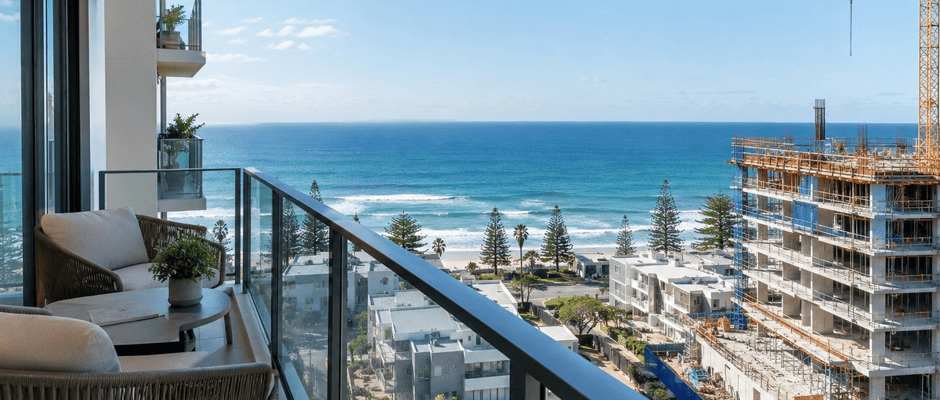
In Keci v Barnes [2026] NSWSC 521, the purchasers exchanged contracts in February 2026 to buy a Bronte home marketed with “sweeping ocean views” for $6.2 million. The adjoining site had consent for nine units, but the Minister had recently declared a proposal for up to 120 dwellings of up to nine storeys on that site to be State Significant Development. The vendors knew of the declaration and had discussed it with their agent.

During inspections, the purchasers asked about the construction next door. The agents told them that nine houses were being built and would not obstruct the ocean views. There was no mention of the larger proposal, which the purchasers later discovered on social media.

Williams J accepted that the statements were literally true. However, because the vendors were promoting the ocean views and the effect of development next door was obvious, a reasonable purchaser would have understood the agents to be conveying everything material known on the subject. By omitting the declaration, the agents impliedly represented that the vendors knew of no facts creating a risk to the views.

It did not matter that the proposal might never proceed, as the risk was real rather than speculative. The Court also rejected the argument that the statements were made in casual conversation, and held that the contract’s “entire agreement” and “no reliance” clauses did not displace their inducing effect. The contract was rescinded and the vendors were ordered to refund the $310,000 deposit.

Ultimately, the decision illustrates the distinction the courts draw between a vendor’s lawful silence and a partial answer that omits known risks.

Foreign Surcharges and Family Trusts: Late Deed Amendments Do Not Undo Liability

A discretionary trust that holds residential land in NSW can be treated as a “foreign person” for surcharge purposes even if it has never had a foreign beneficiary. A recent NSW Civil and Administrative Tribunal decision shows that amending the trust deed after the relevant date will not undo the resulting liability.

Since 2016, foreign persons buying or holding residential land in NSW have been liable for surcharge purchaser duty and surcharge land tax. A discretionary trust is deemed a foreign person if a foreign person is, or could become, a beneficiary. Amendments in 2020 allowed trustees to avoid this by irrevocably excluding foreign persons from their deeds, but relief for past liabilities required this to be done by 31 December 2020.

In Aroosa Invest Pty Ltd v Chief Commissioner of State Revenue [2026] NSWCATAD 323, a family trust bought an off-the-plan unit at Rockdale in 2016 under a deed permitting distributions to a wide class of beneficiaries. Revenue NSW sent correspondence about the issue in 2020 to an outdated address. The trustee executed a deed of rectification in 2022, purporting to exclude foreign beneficiaries from 2016, and a further variation deed in 2024. It was assessed for surcharge duty and surcharge land tax for 2020 to 2024.

Senior Member Redfern confirmed the assessments. The 2022 deed did not define “foreign person” by reference to the legislation or make the exclusion irrevocable. A deed of rectification may bind its parties but cannot alter the “taxable facts” on which the Chief Commissioner assesses, and the 2024 variation operated only from its date. As liability arose under the legislation rather than from the service of notices, the incorrect address did not affect the assessments, and there was no discretion to extend the 2020 deadline. Despite some sympathy for the trustee, fairness could not affect the validity of the assessments.

Ultimately, the decision illustrates the strict operation of the foreign person deeming provisions and the limited effect of retrospective trust amendments on surcharge liability.

Make Good Clauses: When Does a Tenant Have to Remove Its Fit-Out?

Make good disputes often arise when a long commercial lease ends. A recent NSW Supreme Court decision shows that their resolution depends on reading the lease as a whole, rather than interpreting a single phrase in isolation.

Allied Pinnacle Pty Ltd v G R Mailman & Associates Pty Ltd [2026] NSWSC 87 concerned commercial premises at Huntingwood in Western Sydney. The tenant took a ten-year lease in 2015, with options for two further five-year terms, and installed a substantial fit-out at the start of its tenancy. The current landlord bought the premises in late 2017. The tenant did not exercise its option and vacated in August 2025, leaving the fit-out in place.

The central question was the meaning of clause A2.1, which required the tenant to yield up the premises consistent with their “condition” at the commencement of the lease. The landlord argued this meant restoring the pre-fit-out layout. Muston J preferred the tenant’s view that “condition” referred to the standard of the premises, not their configuration. The word was used in that sense in clauses A2.2(c) and A24.5, and the more specific make good provisions in clause A24, which prevailed, contained no reinstatement obligation. Clause B1(22) also gave the tenant a discretionary right to remove its fixtures, which would have been pointless if removal was compulsory.

The tenant did not escape liability entirely. Clause A24.3(b) required repainting of “all painted surfaces”, including the exterior, and the tenant was liable for outstanding redecoration works, including furniture removal, internal repainting and carpet works. The Court rejected arguments based on failure to mitigate, repudiation, waiver, estoppel and an implied duty of good faith, and found that the unconscionable conduct claim would have failed in any event. Damages were referred to by the referee.

Ultimately, the decision illustrates that general yield-up wording will be read in light of the lease’s more specific make good provisions.

Family Development Dispute Ends in Court-Ordered Sale Under Section 66G of the Conveyancing Act

Informal arrangements between relatives to buy and develop property together can be difficult to unwind if the relationship breaks down. A recent NSW Supreme Court decision illustrates how readily the Court will order the sale of co-owned land.

In Russo v Russo [2026] NSWSC 4, an uncle and nephew, both licensed builders, bought land at Revesby in 2015 for $950,000 as tenants in common in equal shares. They agreed orally to subdivide it and build two detached houses, each with a pool, using the nephew’s construction company, with each taking one house. The subdivision was registered in 2022, but the planned partition never occurred. After disputes over development costs, the uncle applied under section 66G of the Conveyancing Act 1919 (NSW) for trustees to be appointed to sell the properties.

Richmond J confirmed that a co-owner is entitled to a section 66G order almost as of right, with the onus on the co-owner opposing it. An order may be refused where a sale would be inconsistent with a contractual right, but not merely for hardship or unfairness.

The nephew relied on the agreed term that each would become the registered proprietor of one lot. However, the Court found the parties had agreed the houses would be the same, a term given effect by a building contract requiring variations to be agreed in writing. Without such a variation, the nephew built his house using a more expensive concrete panelling system, so the term was not enlivened and did not prevent a sale.

Trustees could not be appointed immediately, as section 66G requires at least two individual trustees and only one had been proposed. Two trustees were later appointed in Russo v Russo (No 2) [2026] NSWSC 311. The nephew’s cross-claim for $335,392.12 in unpaid contributions was dismissed, as his records were uncorroborated and many entries were unrelated to the development.

Ultimately, the decision illustrates the limited weight an informal arrangement between co-owners may carry once the relationship has broken down.

NSW Building Approvals Set for Reform Under 2026 Bill 

The NSW Government has proposed the Building (Approvals and Practitioners) Bill 2026, recommending significant reforms to the state’s building certification system. If enacted, the Bill would overhaul the current framework of construction and occupation certificates with a new regime based on building and completion approvals, while repealing several existing pieces of legislation, including the Building and Development Certifiers Act 2018, the Design and Building Practitioners Act 2020, and parts of the Environmental Planning and Assessment Act 1979 relating to building certification.

Among the proposed changes is a new process allowing building approvals and completion approvals to be issued in stages. Applicants undertaking staged projects would be required to submit a staging schedule with their initial application, while approval authorities would need to consider how each stage interacts with the broader development. Moreover, the Bill outlines a new mechanism for varying building approvals and introduces a post-commencement authorisation process where work has begun without the necessary approval.

The proposed legislation would also alter the current position by restricting applications for building and completion approvals and completion approvals to parties who have obtained the landowner’s consent. This represents a departure from the existing regime, where a person with the benefit of development consent may generally apply for construction and occupation certificates even if they do not own the land.The expanded consent requirement may create additional hurdles for developers, tenants and others with interests in land who require approval to commence or finalise works, particularly where third-party landowner cooperation is difficult to obtain.

Lastly, Bill introduces a regulatory framework for prefabricated buildings and would bring manufactured homes within the planning approval regime by requiring development consent in circumstances where it is currently unnecessary. It also strengthens enforcement powers by making non-compliance with certain written directions issued by approval authorities a criminal offence and removes the Land and Environment Court’s existing power to substitute its own decision on certain certification disputes. Although the reforms aim to modernise and streamline approvals, many of the changes remain subject to parliamentary approval and have not yet commenced.

Clarifying Director Liability Under the Design and Building Practitioners Act

The scope of directors’ personal liability under the Design and Building Practitioners Act 2020 (NSW) (DBP Act) continues to be refined as courts consider when individuals may be held responsible for defective building work. The recent Supreme Court decision in Strata Plan 92183 v Samdora Pty Ltd [2026] NSWSC 406 provides important guidance on the distinction between directors who actively participate in construction activities and those whose involvement is limited to broader business responsibilities.

The dispute arose from alleged construction defects affecting a residential townhouse project in Mangerton. The owners corporation sought to hold the parties involved in the development accountable, including the builder and developer, and the individuals who directed each entity. A central issue before the Court was whether the directors could be personally liable for failing to discharge the statutory duty of care imposed by section 37 of the DBP Act (NSW). 

In this case, the owners corporation brought proceedings concerning defective works at a townhouse development in Mangerton. The claim was brought against the builder, developer and their respective directors, with allegations that both directors had breached the statutory duty of care imposed under section 37 of the DBP Act. 

The DBP Act adopts a broad approach to identifying who may be responsible for construction work. Section 36 captures not only those carrying out physical building activities, but also individuals who play a significant role in directing or overseeing the works, including through supervision, coordination, project management or control. Accordingly, a director’s exposure will depend on the extent of their actual involvement in the construction process. 

The Court considered the position of each director separately.In assessing the developer’s director, the Court focused on whether his involvement went beyond that of a passive participant. Although he attended certain site inspections and had some involvement with the project, he did not demonstrate meaningful control over, or responsibility for, the construction activities. As a result, the Court was not satisfied that his role was sufficient to bring him within the scope of the statutory duty of care under the DBP Act.

The Court reached a different conclusion in relation to the builder’s director, whose appointed role as supervisor placed him directly within the construction process.The Court accepted that his responsibilities placed him within the scope of the DBP Act and that he thus owed a duty of care to the owners corporation. Notably, each defect was assessed separately, with liability only arising where the evidence showed that the issue could have been identified through appropriate inspections and supervision.

Ultimately, this decision confirms that holding the position of director alone does not automatically create liability under the DBP Act. The critical question is the individual’s practical role in the construction process. Directors with direct statutory responsibilities or active involvement in supervision and control face greater risk, while those performing functions separate from construction activities will require evidence showing a connection to the alleged defects.