
 Written by
When a building crosses a boundary, the Land and Environment Court can either order it to be removed or order the land beneath it to be transferred to the encroaching owner in exchange for compensation. A recent decision shows how the Court chooses between the two.
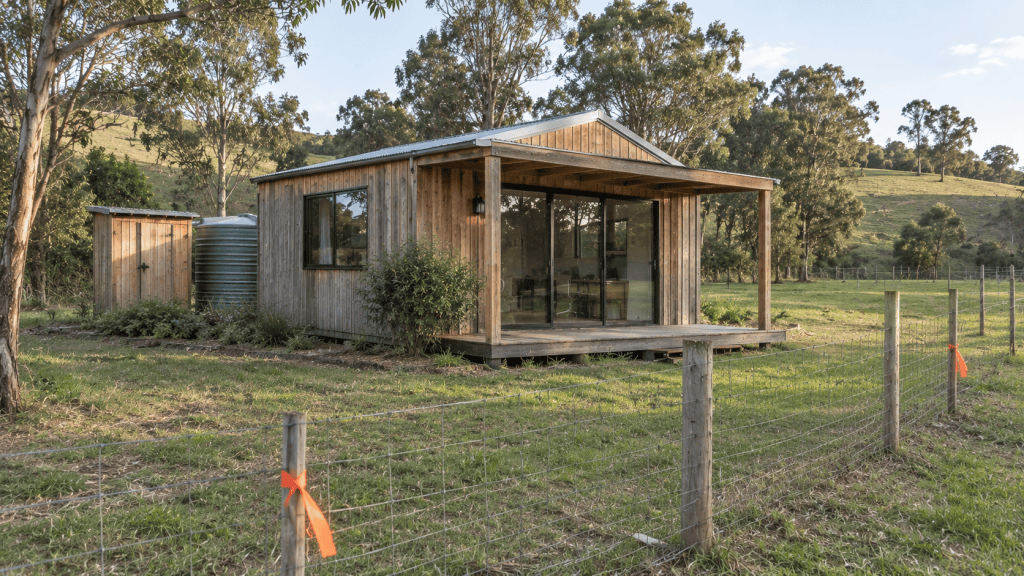
In Johnston v Cutbush [2025] NSWLEC 1482, the respondents owned a rural property at Rosebank. In the 1990s, they enlarged an old shed into a studio that extended up to 5.57 metres onto their neighbour’s land. A composting toilet and grey water tank for the studio were later built entirely on the neighbour’s side. None of the work was approved, and the respondents never checked where the boundary was, relying only on what a real estate agent had told them.
The neighbour bought her property in 2016 and planned to use that area for ecotourism. Her main request was for the structures to be removed. The respondents instead asked for 280 square metres of her land to be transferred to them.
Commissioner Gray ordered removal. Apart from the $65,900 removal cost, there was no evidence of hardship to the respondents. The council approvals they later obtained relied on plans wrongly showing the studio within their own land. The land needed for a transfer was also more than three times the land under the structures.
The respondents were given 60 days to remove the studio, toilet and tank at their own expense.
Ultimately, the decision illustrates that the Court will not readily require a neighbour to give up land where an encroachment results from unauthorised building work.

